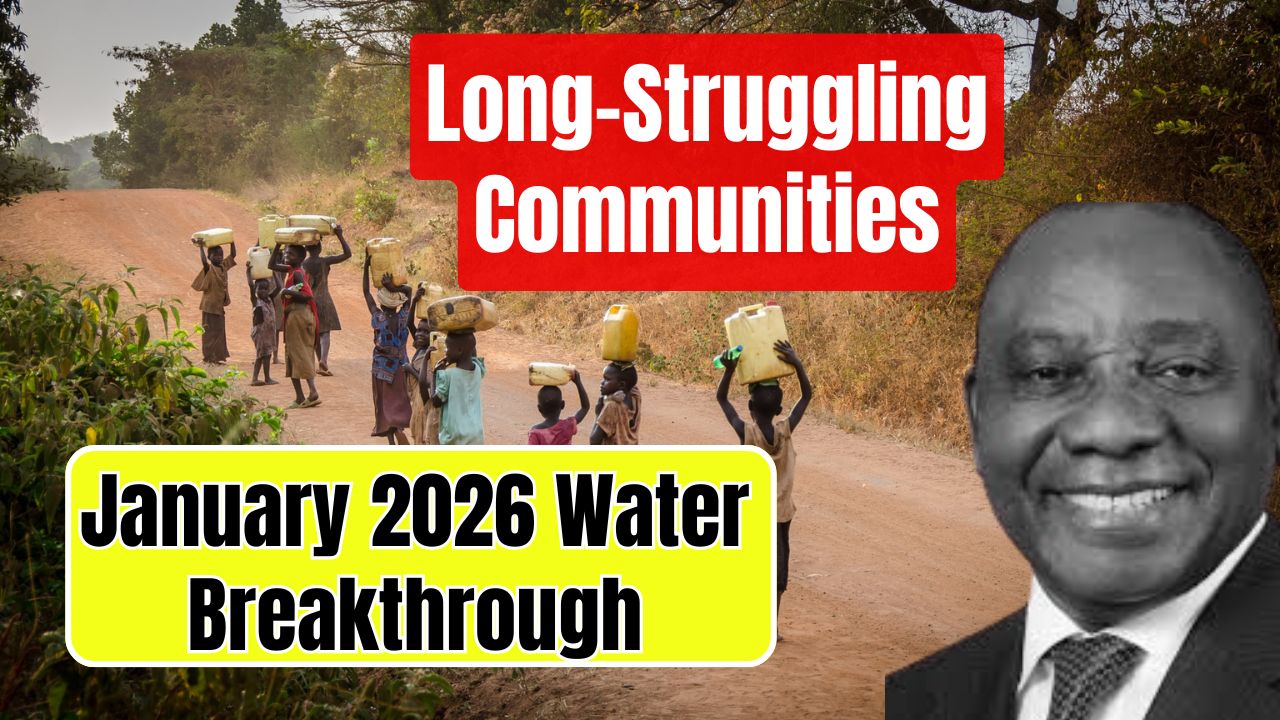
In January 2026, South Africa will witness a rural water projects worth R2 billion which is earmarked for a major infrastructure push and an important milestone in the fight against water shortages in poor communities. It is estimated that the project will give millions of rural residents access to clean and reliable water.
A Major Investment in Rural Water Security
The allocation of R2 billion represents one of the largest recent investments in rural water infrastructure. The money will be used to complete projects that have been delayed, upgrade systems that are becoming obsolete, and give access to water to villages that have been relying on sources that are either unsafe or unreliable for years.
Why January 2026 Marks a Turning Point
The projects will come on stream at the beginning of 2026. This will give the authorities improved planning cycles and budget certainty to work with. January also conveys urgency since the water stressed situation is getting worse due to factors like population growth, climate change, and the already bad state of the infrastructure in rural areas.
What the Projects Will Deliver
The rural water programme is all about implementing practical and impactful solutions such as new boreholes, upgraded pipelines, water treatment plants, and reservoirs with increased capacity. The focus is on not only expanding the access to water but also quality and sustainability through these upgrades.
Communities Expected to Benefit Most
The rural provinces that have been struggling with water supply issues will be the main beneficiaries of the investment. Most of the villages that now rely on tankers or seasonal water sources are expected to access water in a more stable and predictable way after the projects are finished.
Economic and Social Impact Beyond Water
Besides providing a basic need for households, improved water access is expected to deliver even larger benefits. Reliable water supply entails local agriculture, less health risks, and giving back time spent in water collection, mainly for women and children, hence their greater involvement in education and economic activities.
Addressing Past Project Delays
Past rural water projects have been acknowledged by the authorities to have suffered from delays, poor maintenance, and funding gaps. The 2026 rollout intends to enforce strict project oversight, liaison with local municipalities, and shorter completion timelines.
Job Creation and Local Involvement
The water projects will be a source of employment in the short run for the people engaged in the construction works and the long run for those employed in maintenance and operations. Local contractors and the involvement of the community are to be considered as the main elements of the rollout.
Challenges That Remain
Officials have warned that securing water will not be an overnight solution, despite the large sum involved. The new infrastructure will have to cope with ongoing maintenance, skilled management, and the protection of water sources which will be the key determinants.
A Promising Start for Rural Development in 2026
The start of R2 billion rural water projects in January 2026 is a light at the end of the tunnel for the communities that have suffered the unreliable supply for years. The initiative, while addressing challenges, can definitely be recognized as a considerable step to closing the water access gap and elevating the quality of life of rural South Africans.